
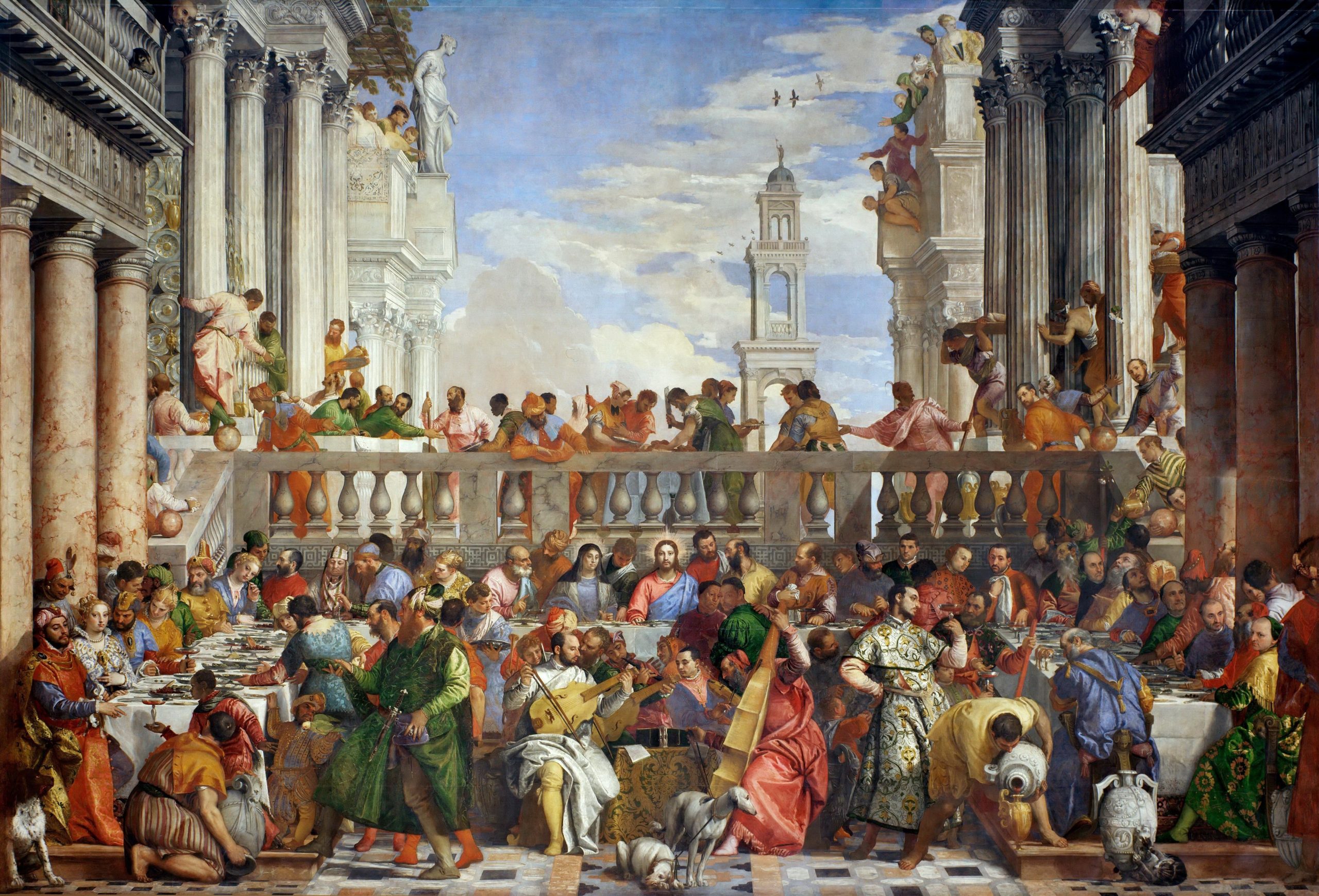
Paolo Veronese (c. 1562-1563), The Wedding at Cana
To express God’s love for his people, so strong and tender, so jealous and merciful, the prophets could find no more meaningful image than that of nuptial love. So it was from this viewpoint that they pictured the relationship of alliance and friendship that God wished to establish with Israel and the work of salvation that he wanted to accomplish in Jerusalem’s benefit. “As a young man marries a virgin, so shall your maker marry you, and as the bridegroom rejoices over the bride, so shall your God rejoice over you” (Is 62:5). The New Testament takes up the allegory again, giving it a deeper and more concrete meaning. By becoming man, the Son of God is wedded to human nature, and joins it to himself in a personal and indissoluble way. This is why, when speaking of the Kingdom of heaven, Jesus so often compares it to a wedding feast, and phrases the invitation to it as if to a wedding. It is his wedding which is celebrated in the Incarnation and then consummated on the cross.
In the context, Jesus’ first miracle, which was performed during a wedding celebration, recalls the inexpressible reality of the relation of love, intimacy and communion which the incarnate Son of God came to establish with men. Not only Israel or Jerusalem, but the whole of mankind is called to participate in this nuptial union with God. The price of this privilege will be paid for by Jesus on the cross at the time ordained by the Father.
When Jesus went with his disciples and his Mother to Cana, his time had not yet come (Jn 2:4); yet through Mary’s intercession he anticipates it with a “sign” that foreshadows salvation and redemption. Water is changed into an abundance of the best wine, as if to indicate the deep change that will be worked in men by the death and resurrection of Christ, making grace abound where sin used to abound, changing the cold, tasteless water of human selfishness into the strong, noble wine of charity. All this is realized because man—each one of us—is invited to take part in this wedding of the Word with humanity, and thereby to enjoy his love and his intimacy as a spouse.
The presence and intervention of Mary at the wedding in Cana is a strong reason for confidence; we feel ourselves unworthy of communion with Christ, but if we put our trust in his Mother, she will prepare us and usher us to him, even hastening the time.
From Fr Gabriel of St. Mary Magdalen’s Divine Intimacy.