
Homily for the Mass of the Lord’s Supper
7.30pm Thursday 17th April 2025
St Francis Xavier Church, Corio
In human society, we show our love for each other by giving each other gifts. Our gifts are tangible, outward expressions of our inward love. We give each other all sorts of gifts. The greatest gift you can give another person is the gift of your own life. This is how husband and wife show their love for each other in marriage. It is also the supreme expression of a parent’s love for a child: what parent would hesitate to lovingly give their life to save the life of their child?
Our hearts are made for more than human love. As Saint Augustine mused, “Our hearts are restless until they rest in you.” God is love and He created us to participate in His love. God loves us and He wants us to love Him. This does not mean that God created us to meet his unmet love-need. Rather, God created us to be the recipients of His infinite generosity. But our capacity to receive God’s love is conditioned upon our capacity to give love to God. The more we give love to God, the more of God’s love we can receive. God wants us to love Him only so that He can pour more of His love upon us. The more love we give, the more love we are able to receive.
The gifts we give God are called sacrifices. Throughout history, humanity has offered all sorts of sacrifices to God. In the Old Testament, the people of Israel offered animal sacrifices like sheep and goats, as well as food sacrifices like bread and wine. These sacrifices, however, are tainted by sin. They are offered by people with divided hearts. They are tokens of imperfect, time-limited acts of love.
Humanity has only one sacrifice or gift that God finds pleasing: the sacrifice of Jesus. Jesus’ sacrifice is the only acceptable sacrifice in God’s eyes because Jesus alone loves the Father perfectly and unceasingly. He never withheld love from God through sin. Because of this, His love for the Father has no end: it is eternal. Jesus expresses His perfect sacrifice of love to the Father by dying on the Cross, but His death on the Cross did not cause His eternal act of love for the Father to cease. This is why Jesus rises from the dead bearing the wounds of the Cross. He rises from the dead in His sacrificed state. Jesus’ death does not interrupt His gift of His love to the Father. This makes Jesus’ sacrifice truly “new”. It is unlike any other sacrifice humanity has ever offered the Father.
Jesus expressed His “new and eternal” sacrifice through the Cross, but the Cross is not the only expression of Jesus’ “new and eternal” sacrifice. The night before He died, Jesus instituted another means by which His “new and eternal” sacrifice could be expressed in time: the ritual of the Mass.
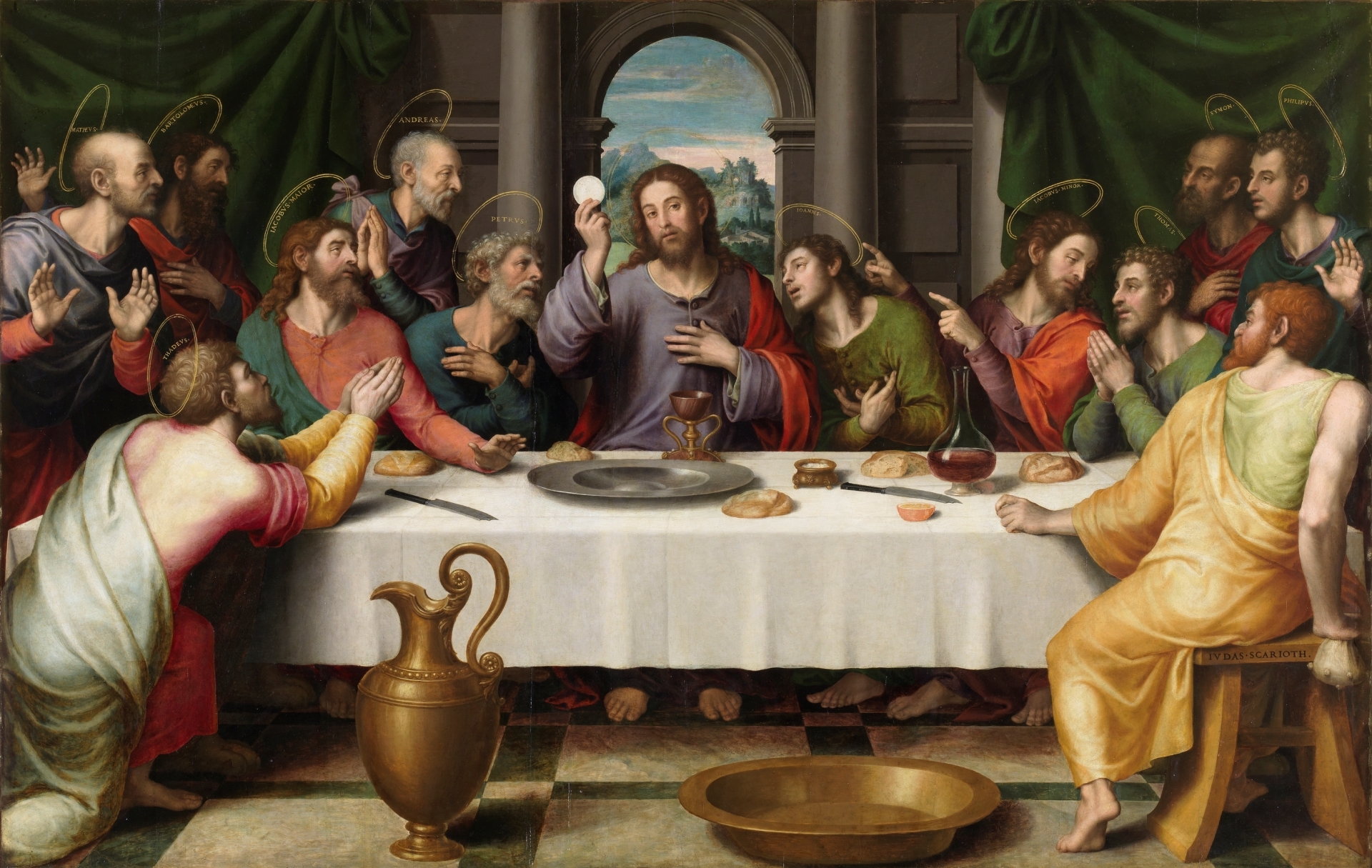
At the Last Supper, Jesus took bread, saying: “This is my Body, which will be given for you”. Then he took the wine, saying: “This is my Blood, which will be poured out for you.” Jesus expresses His perfect love by giving His Body and Blood: on the Cross but also in the Mass. The same love that offered the Body and Blood on the Cross offers the Body and Blood in the Mass. Jesus concludes by commanding His apostles to “do this in memory of me”. The Greek word for “do” (poiew) has multiple meanings, including to offer sacrifice. Jesus is telling his apostles to “offer this – my Body and Blood – in memorial of me”. For the Jews, a memorial sacrifice was not just a way of remembering a past event. A memorial sacrifice made a past event present. The Passover, for example, was celebrated every year to make the original Passover present. Thus, when Jesus says, “Do this in memory of me,” he means: “offer this, my Body and Blood, to make my sacrifice present throughout all of history.”
Jesus makes His sacrifice present in the Mass so that we can participate in it. The Catechism explains: “In the Eucharist the sacrifice of Christ becomes also the sacrifice of the members of his Body. The lives of the faithful, their praise, sufferings, prayer, and work, are united with those of Christ and with his total offering, and so acquire a new value Christ’s sacrifice present on the altar makes it possible for all generations of Christians to be united with his offering.” ‘Active participation in the Mass’ has been profoundly misunderstood in recent decades. Active participation in the Mass is not measured by doing lots of jobs. Rather, active participation in the Mass is measured by active participation in the Sacred Heart of Jesus. As Saint Peter taught: “Come to him… and be yourselves built into a spiritual house, to be a holy priesthood, to offer spiritual sacrifices acceptable to God through Jesus Christ.” In the Mass, your body and blood is offered to the Father along with the Body and Blood of Jesus. The offering of the baptised is united to the offering of Christ. In other words, there are two offerings: the offering of Christ and the offering of the baptised.
Offering religious sacrifice is the domain of the priest. The sacrifice of Jesus is, properly speaking, offered only by Jesus. He is the true High Priest of our religion. Nevertheless, since Jesus wants us to participate in His sacrifice, He also wants us to participate in His priesthood. There are two modes of participation in the priesthood of Christ. The ministerial priesthood is responsible for making present and offering the Body and Blood of Jesus. The priesthood of the baptised is responsible for making present and offering their own body and blood.
Jesus instituted the ministerial priesthood when he washed the feet of the apostles. Just prior to washing their feet, Jesus laid aside his outer garments, as you will see me do in a few moments. In the Old Testament, laying aside outer garments and washing feet was something priests did before offering sacrifice. In the book of Leviticus, we read: “Then Aaron shall come into the tent of meeting, and shall put off the linen garments which he put on when he went into the holy place, and shall leave them there; and he shall bathe his body in water in a holy place, and put on his garments, and come forth, and offer his burnt offering and the burnt offering of the people.” Similarly, in the book of Exodus, God instructs Moses: “You shall make a bowl of bronze for washing. And you shall put it between the tent of meeting and the altar, and you shall put water in it, with which Aaron and his sons shall wash their hands and their feet. When they go into the tent of meeting, or when they come near the altar to minister, to burn an offering by fire to the Lord, they shall wash with water, lest they die.” Aaron and the other priests prepare to offer sacrifice by taking off their garments, washing their feet, and re-clothing themselves. By undressing and washing the feet of the apostles, he is preparing them to concelebrate the first Mass: he is sharing His High Priesthood with them.
The ministerial priesthood is ordered towards the priesthood of the baptised. The ministerial priest’s mission is to give you everything you need to offer yourself to the Father. The ministerial priest teaches you, sanctifies you, and governs you so that you can fulfil the purpose for which you were created: to give yourself to God as a gift of love.