
Homily for the Easter Vigil
8.00pm Saturday 19th April 2025
St Francis Xavier Church, Corio
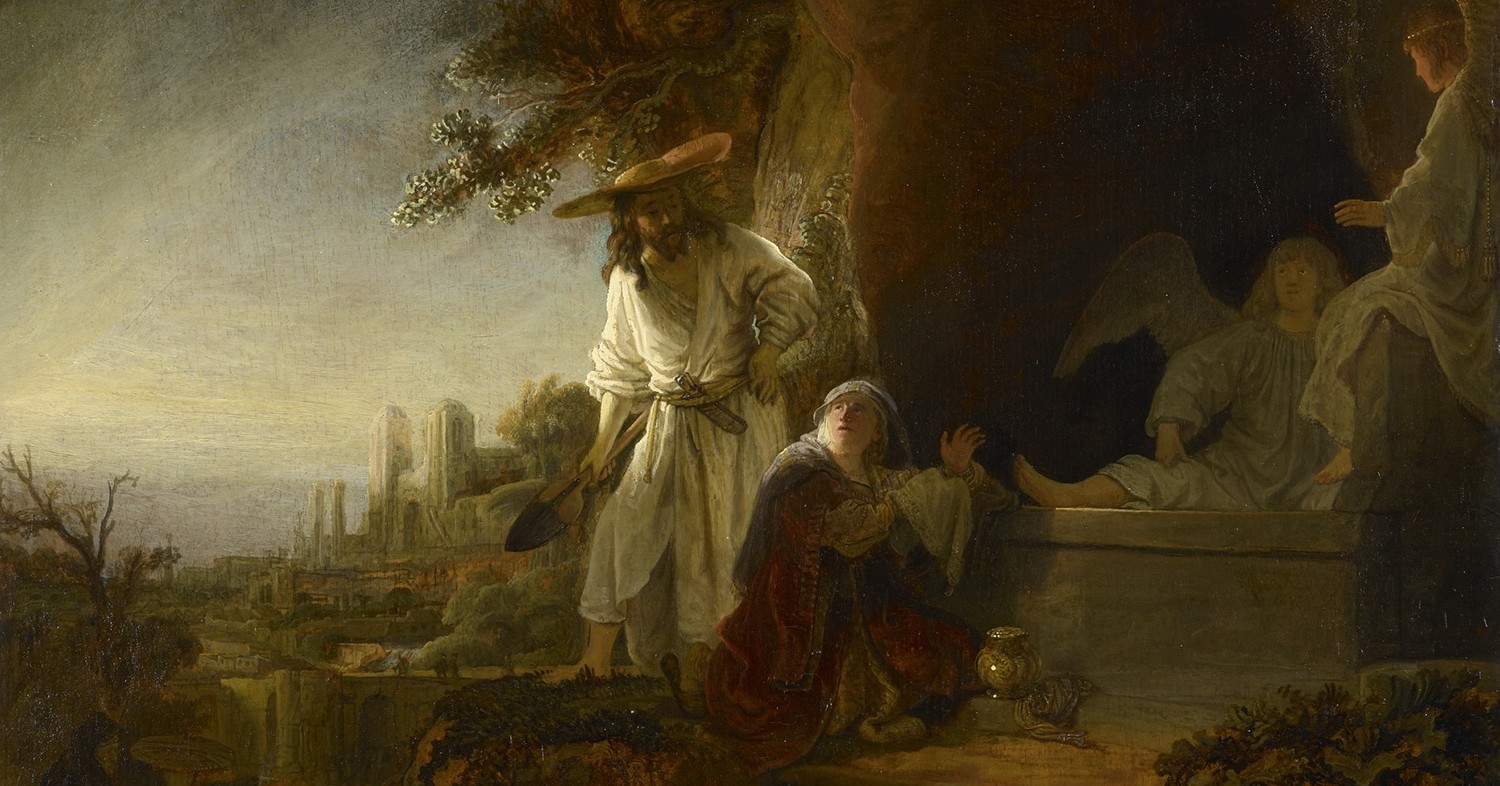
Rembrandt’s depiction of the risen Christ as the Gardener
Among all the various expressions of love, one reigns supreme: life. The greatest gift a lover can give his beloved is the gift of his own life.
Saint John tells us that “God is love”. The Father is the Lover. The Son is the Beloved. The Holy Spirit is the Love reciprocated by Father and Son. God is an eternal communion of Love.
Since God is Love, God is also Life. The Father expresses Love by eternally sharing His Life with His Son. The Son expresses Love by sharing His Life with His Father. The Holy Spirit is the Life shared by Father and Son. Since God is an eternal communion of Love, He is also an eternal communion of Life.
Yet God was not content to simply share His Life within Himself; God desired to create new Life. True love does not simply desire to share life within an enclosed circle; it desires to create life precisely to expand the circle of those who share life.
The book of Genesis reports that, in the beginning, “the earth was a formless void, there was darkness over the deep.” Darkness and formlessness signify lifelessness. Even today, as we examine the far reaches of the universe, we discover that material reality is, by default, a dark, formless and lifeless void. The book of Genesis describes this dark, formless and lifeless void as “water”.
From this watery void, the Father, Son and Holy Spirit will together bring new life. The Father directs the generation of new life by speaking. The Son is the Word spoken by the Father to bring life. The Holy Spirit is the force that effects the Father’s spoken Word. Over six days, God draws life from the water.
Among everything God creates, man is unique. Only upon man does God bestow His image and likeness. Only into man does God breathe His Holy Spirit. As God’s image, man can know God with his intellect and love God with His will. As God’s likeness, man shares God’s life: the Holy Spirit. As the Catechism puts it: “God, infinitely perfect and blessed in himself, in a plan of sheer goodness freely created man to make him share his own blessed life.”
God gave to man a Garden as his home: the first man was a gardener. Gardens are, by definition, places of life. This Garden was a visible, physical reminder of the invisible, spiritual life God shared with man. From the centre of the Garden flowed four rivers of water, from which man could drink. At their source was a tree, the tree of Life, whose fruit man could eat. As man nourished his body with the water from the rivers and the fruit from the tree, God nourished man’s soul with supernatural water and spiritual food.
God placed only one condition upon man’s share in God’s life: sharing in God’s love. Man refused this condition, withholding love from God through sin. As a consequence, man lost access to the life of God: he subjected Himself to everlasting death. God drove man from the Garden of Life only because man first drove God from his heart.
God did not, however, drive man from God’s heart. Though man withheld love from God, God did not withhold love from man. He did not abandon us to our self-imposed fate. God decreed that if one man could be found who truly loved God, then all men could regain access to the life of God through this man. But no such man could be found. Eventually Noah, Abraham, Isaac, Jacob, Moses and David all withheld love from God. So God resolved to come Himself as a man of perfect love: Jesus.
Jesus alone loved God unceasingly. Never once did He withhold love from God through sin. Because of this, Jesus’ love for God has no end: it is eternal. Since Jesus came to the end of His earthly life without ever once withholding love from God, God did not withhold the Holy Spirit from Jesus.
As Jesus’ lifeless body was enclosed within the dark and formless void of the tomb, God’s Holy Spirit hovered. Before dawn, while all was still dark, God breathed forth His Holy Spirit, raising up Jesus to live in His image and likeness.
At the very end of John’s Passion narrative, which we heard on Good Friday, we learn that “in the place where Jesus was crucified there was a garden, and in the garden a new tomb where no one had ever been laid.” Thus, as Jesus emerges from the tomb, Mary Magdalene “supposes him to be the gardener.” How right she was. The first gardener withheld love, causing the old tree of life to cease bearing fruit. The second gardener gives love, causing the new tree of life – the Cross – to bear fruit. Jesus is God’s new gardener, sharing the life of God with man from the Tree.
Saint John reports as Jesus’ Heart was pierced by the lance, blood and water poured forth. Like the rivers of water that flowed from the Garden of Eden, the water of grace flows from the Heart of Jesus. We drink from this water in Baptism. Like the fruit that fell from the tree of life, blood falls from the Heart of Jesus. We eat this fruit in the Most Holy Eucharist. Through the sacraments of the Church, the risen Jesus shares the life of God with us. Let us remain in His love, that we may share His life now and eternally in heaven.