
Nehemiah 8:2-6,8-10 | Psalm 18(19):8-10,15 | 1 Corinthians 12:12-30 | Luke 1:1-4,4:14-21
When Ezra the priest read the Word of God aloud, the people could not get enough. Indeed, they wept with joy. The book of Nehemiah tells us, “Ezra the priest… read the book from early morning till noon; all the people listened attentively to the Book of the Law… The people were all in tears as they listened to the words of the Law.”
For many of us, reading the Bible causes us to weep with sorrow rather than joy. We know the Bible is important but the moment we open it we feel like a ship without a rudder. It all just seems so impenetrable. Today, I want to give you some tools to help you love the Bible.
The Bible
The first and most important point that we must accept is that God is the real author of Sacred Scripture (CCC 105). God loves us, so God communicates Himself to us, and He does this in a way that we can understand: through human words and actions. Therefore, “to compose the sacred books, God chose certain men who, all the while he employed them in this task, made full use of their own faculties and powers so that, though he acted in them and by them, it was as true authors that they consigned to writing whatever he wanted written, and no more.” This means that “the books of Scripture firmly, faithfully, and without error teach that truth which God, for the sake of our salvation, wished to see confided to the Sacred Scriptures.” When we pick up the Bible, we do so knowing that it contains God‘s Word. We will only make sense of the Bible if we read with faith.
When we do pick up the Bible, we will quickly realise that it is, in fact, a collection of short books. The word ‘Bible’ comes from the Greek word ‘biblos’, meaning ‘library’. In other words, God speaks to us not just through one book, but through a collection of books.
Most libraries contain different categories or ‘genres’ of books: poetry, history, fiction, journals. In the same way, the Bible is a library that contains different categories of books. There are books of law, books of poetry, books of prophecy, books containing practical wisdom for daily living, books of history, and letters.
All the books of the Bible are God’s Word to us, but God speaks through each book according to the genre of the book. The way you read poetry is different to the way you read law, which is different to the way you read history. The most annoying thing about the Bible is that it is not arranged by category. Unlike most libraries, the Bible will have a history book next to a poetry book, next to a book of laws, next to a letter. It is, therefore, very important to know the genre of the book of the Bible you are reading.
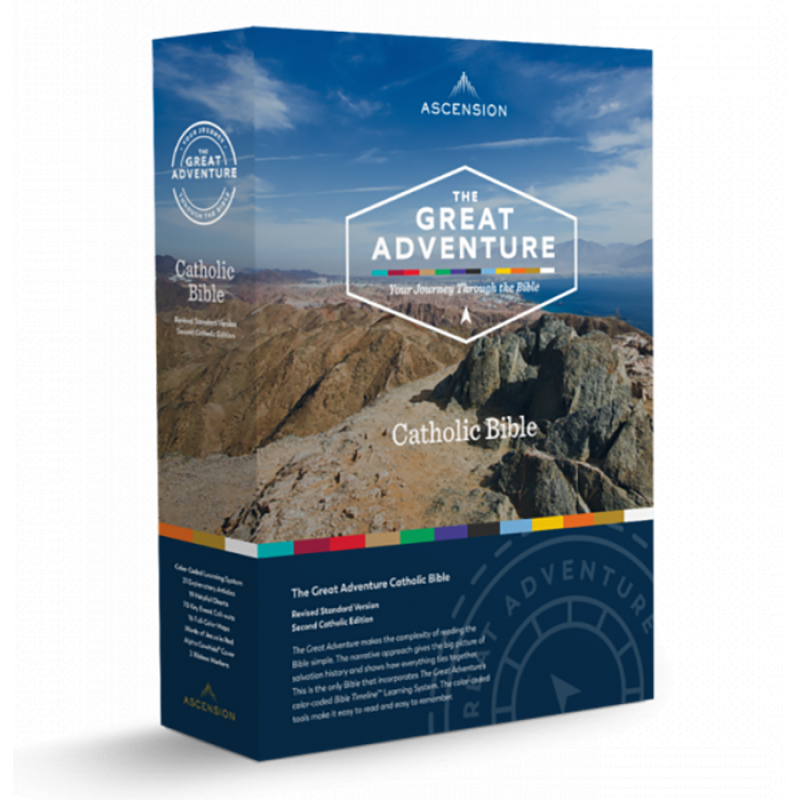
The Great Adventure Catholic Bible makes the complexity of reading the Bible simple. It incorporates a colour-coded learning system to show Catholics how to read the Word of God they so deeply desire to understand.
With exclusive color coding, insightful articles, detailed charts, and more, The Great Adventure Catholic Bible leads Catholics page by page, chapter by chapter, through the story of Scripture. It reveals the big picture of salvation history and shows how everything ties together, making Scripture easier to read and remember. It takes away the confusion of not knowing where to begin and the frustration of not understanding what you’re reading.
After years of struggling to read and understand Scripture, hundreds of thousands of Catholics have discovered a deeper relationship with God through this one-of-a-kind Bible. There has never been another Bible like it.
The Gospels
I want to take a moment to focus on one set of books within the library of the Bible: the four Gospels. The Gospels are the most important books of the Bible because the tell us directly about the life of Jesus.
The Gospels fall into the ‘genre’ of ancient biographies. Today, biographies tend to be quite long. They tend to tell us everything about their subject. Ancient biographies were different. They were much shorter, averaging between 10,000 and 20,000 words so that they were short enough to fit onto one scroll of parchment. Each of the Gospels fall within this word-length.
Because they were shorter, ancient biographies focused on three parts of a person’s life. The majority of the biography would focus on the person’s public career, then conclude with an account of the person’s death. Sometimes ancient biographies would begin with a brief account of the person’s birth. This is exactly what we find with the Gospels. Each Gospel primarily focuses on the public ministry of Jesus, then concludes with an account of his death and resurrection. Some begin with an account of Jesus’ birth.
As biographies, the Gospels are historically accurate and reliable. Saint Luke tells us that his Gospel is intended to be “an ordered account… so that you… may learn how well founded the teaching is that you have received.” The Greek word for “well founded” is better translated as “certainty”. St Luke wants us to learn the certainty of the events of Jesus’ life.
Saint Luke was a close collaborator with Saint Peter and Saint Paul, but he was not an apostle. In order to write an ordered and certain account of Jesus’ life, therefore, Saint Luke needed to do extensive research, which is exactly what he says he did. He says that his account is based on the testimony of “eyewitnesses and ministers of the word”. One of the eyewitnesses that Saint Luke must have spoken to was Our Lady, for he reports events that only she could have known, such as the Annunciation, the Visitation, the events surrounding John the Baptist’s birth, the Presentation of Jesus in the Temple, and the Finding of the Child Jesus in the Temple.
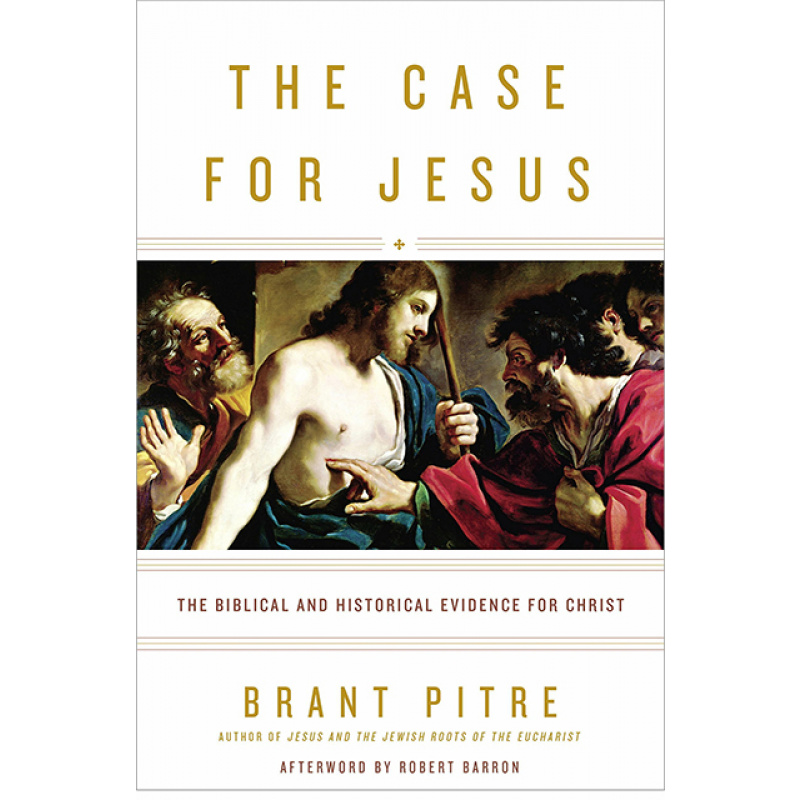
Can we trust the Gospels? Do we really know who wrote them? Do the Gospels communicate truth – or fabricated fables? Who is Jesus? Who did Jesus claim to be? Join Dr. Brant Pitre as he draws evidence from both early Christian and non-Christian writings attesting to the authenticity, authorship, and dating of the Gospels, and as he gives an in-depth look at the Gospel accounts of Jesus’s Crucifixion, Resurrection, and the proclamation of Christ’s divinity. Dr. Pitre’s powerful presentation will strengthen your faith so that you can not only stand firm and profess that Jesus truly is “the Christ, the Son of the living God,” but also confidently respond to any skeptics you encounter.
Interpreting the sense
Before we can start reading the Bible, one final point must be kept in mind. When Ezra read the book of the Law to the people, he “translated and gave the sense, so that the people understood what was read.” The people needed Ezra to help them understand the true meaning of the Word of God. In the same way, we need an interpreter to help us understand the meaning of the Bible. The authoritative interpreter of the Bible is Jesus himself. The Gospels recount that, on multiple occasions, Jesus offered authoritative explanations of Scripture. On each occasion, Jesus teaches that the bible refers to himself and to Catholic realities.
When Jesus entered the synagogue in Nazareth, he read a section from the prophet Isaiah. Then he said: “This text is being fulfilled today even as you listen.” Jesus teaches the true meaning of the passage: the prophet Isaiah was speaking about Jesus.
When Jesus meets Nicodemus, he says that the way Moses saved the people from death by lifting up the serpent on the wooden pole refers to him. This event is recounted in the book of Numbers. Jesus teaches that the book of Numbers is about him.
When Jesus feeds the five thousand, he says that the bread that God gave from heaven to feed the Israelites, as recounted in the book of Exodus, was really about the bread of the Eucharist that Jesus would give. Jesus teaches that the book of Exodus is about him.
When the Pharisees ask Jesus for a sign, Jesus says that the only sign they shall be given is the sign of the prophet Jonah, who was raised from death in the whale after three days and then preached conversion to the pagans. Jesus teaches that the book of Jonah is about him.
And when Jesus greets the two disciples on the road to Emmaus, “he explained to them the things concerning himself in all the Scriptures, beginning with Moses and the prophets.”
If the entire Bible is about Jesus and Catholic realities, then it is also about you, and specifically about how Jesus saves you. In Isaiah, you are the one who is spiritually poor, captive, blind and downtrodden as a consequence of sin. It is you to whom Jesus has brought good news, whom he has liberated, to whom he has given sight, whom he has healed. In Numbers, it is you who Jesus has saved from death by being raised on the wood of the Cross. In Exodus, it is you who Jesus feeds with the bread from heaven in the Eucharist. in Jonah, it is you who have been converted by Christ after his resurrection from the dead. When you read the Bible, read it as being about Jesus, Catholic realities, and you.
The Second Vatican Council declared that Jesus has entrusted “the task of authentically interpreting the word of God… to the teaching office of the Church,” exercised by the bishops and clergy. “This teaching office is not above the word of God, but serves it, teaching only what has been handed on, listening to it devoutly, guarding it scrupulously and explaining it faithfully in accord with a divine commission and with the help of the Holy Spirit.” When you come across something in the Bible that is hard to understand, ask your priest or refer to the popes and the Fathers of the Church. To help you get started, I have put this homily, together with some helpful resources, on the home page of the parish website.
The Bible is a library that contains God’s Word to us. Every page refers to Jesus, Catholic realities, and to you.